MINT 1979 PLYMOUTH ARROW GT SURVIVOR: THE 2600LB JDM MOPAR TIME CAPSULE!
https://youtu.be/QZN8DWSbSXY?si=RSP0N8qYMSczlijL
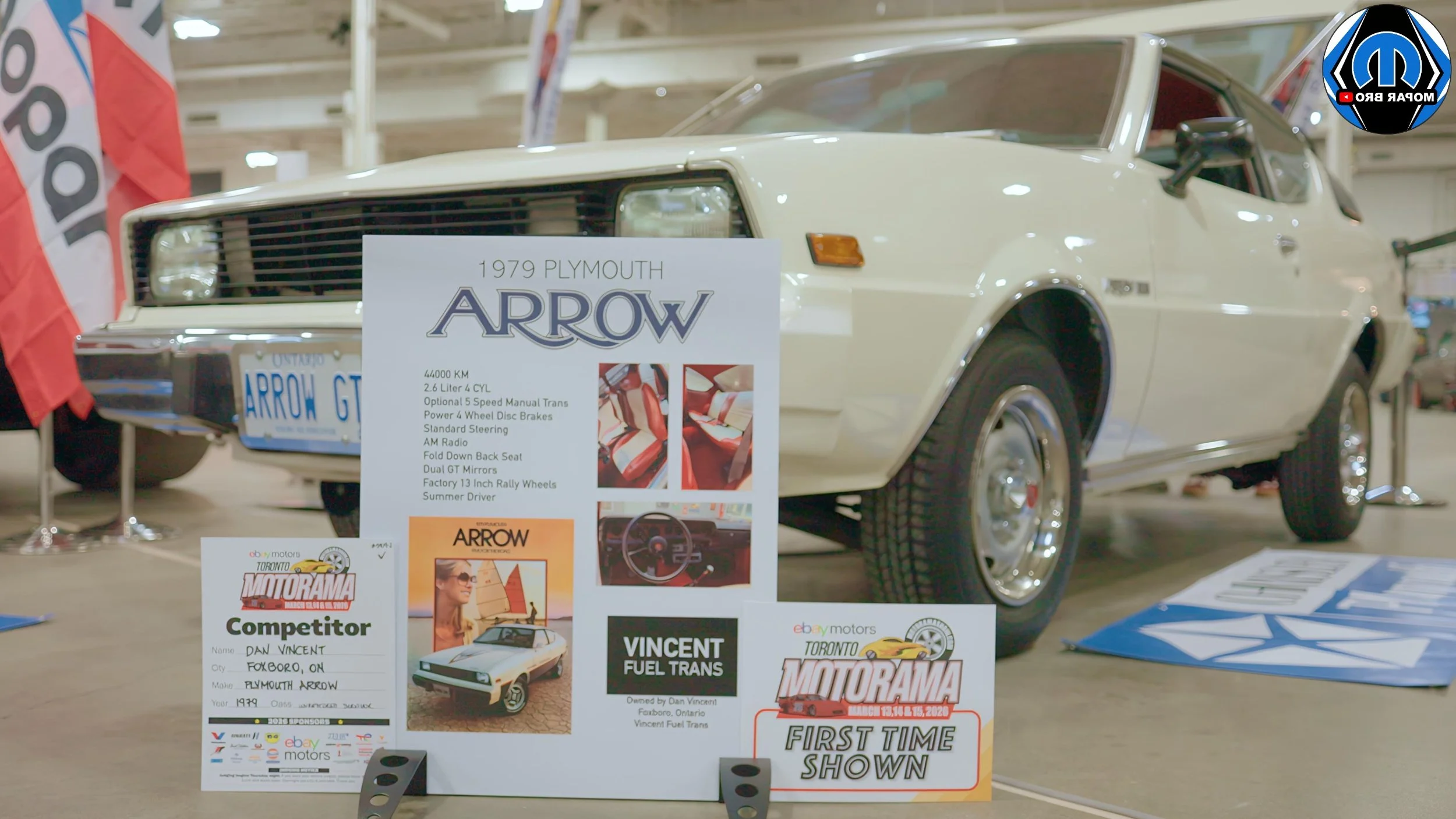
Welcome back to the Mopar Bro network, where we appreciate every era of automotive history. Today, we are taking a step back from the modern horsepower wars to appreciate an absolute unicorn on the show floor at the Toronto Motorama. You are looking at a pristine, fully intact 1979 Plymouth Arrow GT, proudly owned and displayed by Dan Vincent. In a world obsessed with heavy, computer-controlled street sweepers, finding a classic captive import from the late 1970s that hasn't been rusted out, crushed, or chopped up into a dedicated race car is an incredibly rare event. This is a true survivor, a vehicle that tells a massive story about Chrysler's history, international automotive partnerships, and the golden era of lightweight, analog driving.
To fully appreciate this 1979 Plymouth Arrow GT, you have to understand the era it came from. During the 1970s, domestic automakers were scrambling to offer fuel-efficient, compact vehicles to the North American market. Chrysler's solution was a brilliant partnership with Mitsubishi Motors. The Plymouth Arrow, built in Japan and heavily marketed in Southeast Asia, shares its core DNA with the Mitsubishi Celeste. This cross-cultural engineering created a unique blend of Japanese reliability and classic Mopar styling. However, because these vehicles were largely considered economical commuter cars back in the day, they were often treated as disposable. Finding one today that has been garage-kept and loved, especially in the highly optioned GT trim, is like finding a needle in a haystack.
The GT badge on the fender of this Plymouth Arrow signifies that this isn't just a base-model commuter. This specific car was ordered with the upgraded 2.6 Liter 4-cylinder engine, which produced a respectable 95 horsepower from the factory. While 95 horsepower might not sound like much compared to a modern SRT vehicle, you have to remember that this chassis tips the scales at a featherweight 2,600 pounds. When you pair that incredibly light curb weight with the optional 5-speed manual overdrive transmission, you get a perfectly balanced, engaging summer driver that connects the driver directly to the road. There are no electronic nannies or rev-matching computers here; it is just pure, mechanical driving dynamics.
Dan Vincent's 1979 Plymouth Arrow GT is loaded with fantastic factory options that highlight the charm of the era. The exterior is finished in a beautiful, classic white paint that perfectly contrasts with the sleek, sloping fastback roofline. It features the highly desirable factory 13-inch Rally wheels, giving it an aggressive, sporty stance that hints at its Mopar lineage. To ensure the car stops as well as it handles, it was optioned with power 4-wheel disc brakes, a fantastic safety and performance upgrade for a vehicle of this vintage. The exterior package is completed with standard steering and the iconic dual GT mirrors, keeping the aesthetic completely period-correct for a late-70s sports coupe.
Stepping inside the cabin of this Arrow GT is like walking into a time machine. The dashboard design is a massive talking point for hardcore Mopar enthusiasts, as the gauge cluster layout and overall styling are incredibly reminiscent of the legendary 1970 to 1974 Dodge Challenger E-body dashes. It is an analog masterpiece. The interior features the original AM radio, manual roll-up windows, and the classic ashtray and lighter combination that was standard equipment decades ago. While the dash and the fold-down back seat remain original, a previous owner took the time to beautifully recover the front bucket seats in a striking two-tone red and white pattern, laying down fresh red carpet to match. The result is an interior that feels vibrant, sporty, and incredibly well-preserved.
The irony of the Plymouth Arrow's history is that its brilliant engineering almost led to its total extinction. Because the chassis only weighed 2,600 pounds and featured a sleek, aerodynamic profile, the hardcore drag racing community quickly realized it was the ultimate foundation for a race car. Back in 1977, you could actually order a bare, sheet-metal race car body-in-white for just $1,230. Drag racers bought these cars up by the hundreds, gutted the 4-cylinder engines, dropped in massive V8s, and birthed a generation of 7-second tube-chassis doorslammers. That racing heritage makes finding an uncut, street-driven survivor like Dan Vincent's GT even more historically significant. It shows us exactly what these cars looked like before they hit the drag strip.
Hit play, watch the full walkaround from the Toronto Motorama, and subscribe to the Mopar Bro YouTube channel for the best historic and aggressive Mopar build content on the internet.