1/8 Mile Mopar Drag Racing: Launch Mechanics & 60-Foot Data
https://youtu.be/pIbB_7TFWug?si=c0Gyug5ouMpWvF38
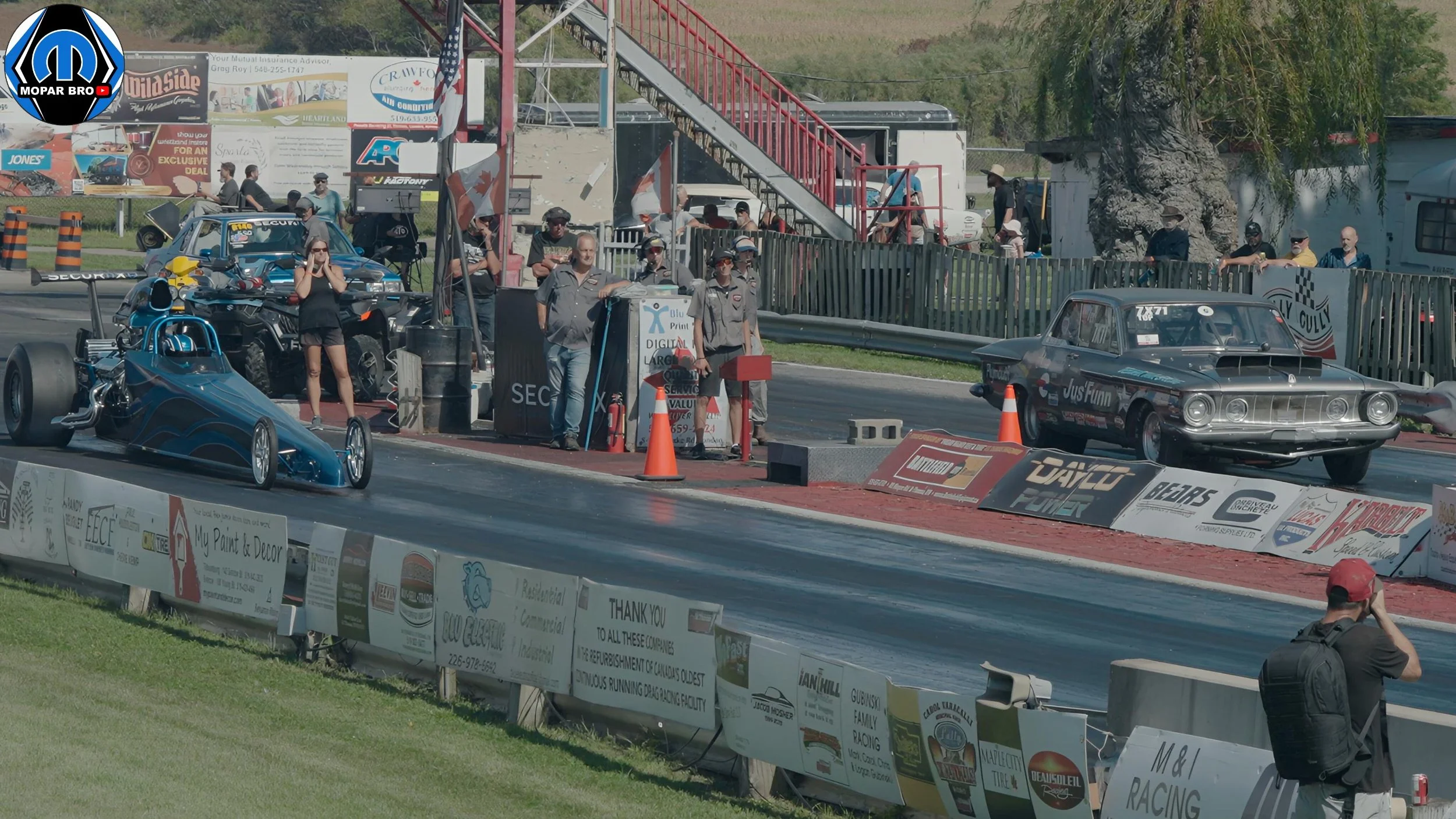
The 1/8-mile drag strip removes top-end aerodynamics from the equation. Success is strictly dictated by initial mechanical grip, transbrake reaction, and 60-foot consistency. We indexed the track data at Toronto Motorsports Park to break down exactly how classic steel-bodied Mopar doorslammers compete on the short track.
https://youtu.be/pIbB_7TFWug?si=c0Gyug5ouMpWvF38
The Physics of Bias-Ply Bite
Heavy classic Mopars—such as Dodge Darts and Plymouth Dusters—cannot effectively launch on stiff radial tires without breaking traction. They require a specialized mechanical secondary suspension to absorb massive big block torque.
The Wrinkle Wall Effect: Bias-ply slicks feature a soft, diagonally woven nylon sidewall. Upon transbrake release, the sidewall physically twists and wraps around the wheel.
Contact Patch Expansion: This extreme distortion forces the tire to flatten out against the VHT-prepped track surface, instantly expanding the contact patch for maximum mechanical grip.
Shock Absorption: The wrinkling action absorbs the violent rotational force of a high-RPM launch, allowing a heavy A-Body chassis to dead hook rather than spin.
Doorslammers vs Top Dragsters
When Super Pro brackets match a heavy Mopar doorslammer against a purpose-built Top Dragster or Rail Dragster, the 60-foot data reveals two entirely different tuning philosophies.
Top Dragster Geometry: Rail dragsters utilize an extended wheelbase with the engine mounted directly over the rear axle. This structural advantage eliminates body roll and provides instant, rigid weight transfer.
Doorslammer Compensation: To match the initial acceleration of a tube-chassis dragster, a heavy Mopar must rely on steep rear differential gearing (such as 4.56 or 4.88 ratios) and maximum low-end V8 torque.
Suspension Tuning: Classic Mopars utilize specific suspension geometry—like Super Stock leaf springs or precisely tuned 4-link setups—to aggressively lift the front wheels. This artificially forces weight transfer over the rear axle to compete with the dragster's natural traction advantage.
The 60-Foot Metric
In 1/8-mile competition, analyzing the 60-foot launch data is the only metric that matters. A fraction of a second lost due to poor pinion angle adjustment or incorrect tire pressure cannot be recovered with horsepower at the top end. The short track is an engineering test of transbrake consistency, analog suspension tuning, and raw mechanical friction.
To witness these high-performance platforms run live, secure your event tickets at torontomotorsportspark.com.
For technical Mopar build sheets, hardware specifications, and detailed drag racing tuning data, visit moparbro.com.