1968 Dodge Dart vs Dragster: Analyzing 1/8 Mile Launch Data
https://youtu.be/cg5dhQjaWlU?si=WPfVyXfBNNiEaKFU
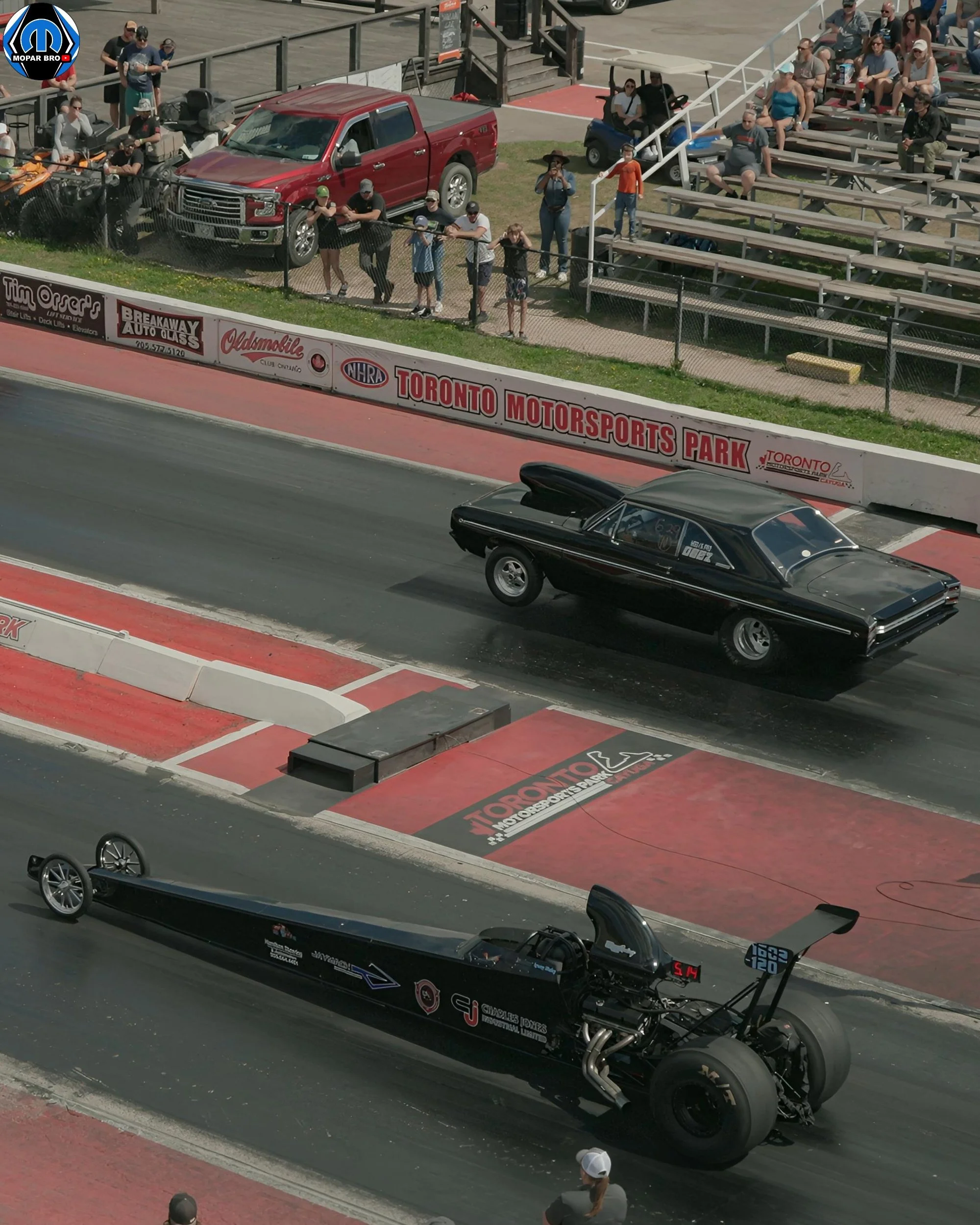
Super Pro bracket racing provides the ultimate raw data for comparing analog mechanical grip against purpose-built chassis engineering. We indexed the 1/8-mile telemetry at Toronto Motorsports Park to document the launch physics of a heavy 1968 Dodge Dart doorslammer competing directly against a rigid Rear-Engine Dragster (RED).
[Insert YouTube Video Embed Here]
Transbrake Telemetry and Bias-Ply Bite
Achieving a 6.25-second elapsed time at 109.15 MPH on the short track requires absolute traction optimization. The Dodge Dart relies heavily on transbrake consistency and specific solid axle suspension geometry to counter its high center of gravity as a steel-bodied Mopar A-Body.
To transfer big block torque efficiently, the Dart utilizes a massive rear slick to force severe bias-ply tire distortion off the starting line. This "wrinkle wall" effect acts as a critical secondary suspension system. It absorbs the violent mechanical shock of the transbrake release, flattening the tire's contact patch against the prepped track surface and allowing the heavy chassis to dead hook without wheelspin.
Chassis Friction: Doorslammer vs. RED
The performance gap between these two platforms dictates the race entirely within the first 60 feet.
The RED Advantage: The Rear-Engine Dragster possesses an immediate, structural weight-transfer advantage. By placing the engine directly over the rear axle on an extended, rigid wheelbase, the chassis eliminates body roll and maximizes instant traction.
The Doorslammer Strategy: To stay competitive against a purpose-built dragster architecture, the Dart must overcome its heavy Detroit steel construction. It relies entirely on steep rear gearing, raw V8 rotational force, and precise tuning of its rear suspension to aggressively launch the front wheels and match the dragster's initial acceleration.
In 1/8-mile competition, top-end aerodynamics are irrelevant. The slip is won or lost on clinical, mechanical traction and mid-track acceleration.
To analyze this bracket class data in person and see these platforms run live, buy tickets at torontomotorsportspark.com.
For granular build sheets, hardware specs, and maintenance guides for high-performance Mopar platforms, visit moparbro.com.